Visibility where answers are formed.
Generative Engine Optimization for ChatGPT, Perplexity and Google AI Overviews, so companies get cited where buying decisions begin today.
What is Generative Engine Optimization?
Generative Engine Optimization (GEO) aligns content so that AI systems recognize it as a reliable source, cite it and embed it in their answers. This applies to ChatGPT and Perplexity as well as to the AI Overviews and AI Mode of Google Search. The difference from classic search engine optimization lies in the goal: SEO fights for a position in the results list, GEO for the mention in the answer itself.
Dometrics builds the foundation for this: a clear entity structure, solid topical authority and machine-readable content. The result is content that convinces people and is cleanly captured by language models.
GEO, AEO, LLMO, GAIO: the terms sorted
Several acronyms circulate around AI search that describe essentially the same goal: appearing in generated answers. Instead of getting lost in buzzwords, a clear classification helps.
| Term | Stands for | Focus |
|---|---|---|
| GEO | Generative Engine Optimization | visibility in generative answer systems (umbrella term) |
| AEO | Answer Engine Optimization | direct answer and snippet captures |
| LLMO | Large Language Model Optimization | optimization for the retrieval and training data of language models |
| GAIO | Generative AI Optimization | umbrella term across all generative channels |
GEO has established itself as the overarching term. What matters is not the label but that content is citable, structured and trustworthy.
Why AI search is no longer a future topic in Austria
AI search is already everyday reality in Austria, not an outlook. The numbers are unambiguous.
AI usage in Austria: 70 % of consumers use AI services, rising to 95 % in Gen Z (Handelsverband & Google Austria, 2025). 34.1 % of the working-age population use AI tools, ranking 18th worldwide (Microsoft / Report.at, 2025). Among 16- to 24-year-olds it is 57 %, among students 76 % (Statistik Austria, 2024).
On the company side, adoption is accelerating too: the share of AI-using companies in Austria has nearly doubled within a year, to 20 percent (Statistik Austria, 2024). The next generation of customers researches in AI answers, and a growing share of buying decisions begins there. Whoever is missing from these answers no longer appears in an ever larger part of the customer journey.
SEO vs. GEO: difference and interplay
GEO is not a replacement for SEO but an additional layer on the same foundation. Around 80 percent of the measures, such as structured data, load time and fact-clear content, work for both worlds at once.
| Dimension | SEO | GEO |
|---|---|---|
| Goal | ranking in the results list | cited/recommended in AI answers |
| Success unit | position & clicks | mentions, share of voice |
| Platforms | Google, Bing | ChatGPT, Perplexity, Gemini, AI Overviews |
| Content logic | keyword relevance | fact clarity, citability, entities |
| Measurement | rankings, organic traffic | citation tracking, answer share |
Anyone running SEO cleanly today is laying the basis for GEO at the same time. The details of classic optimization are on the SEO service page, the background in the guide Generative Engine Optimization.
How generative systems select sources
To appear in AI answers, you have to understand how the answer is formed. Most systems work on the principle of Retrieval-Augmented Generation (RAG): the language model does not answer a question from memory but retrieves relevant, current sources via a search, checks their content and builds an evidenced answer with source references from it.
Citability is therefore decisive: what gets selected is whatever answers a sub-question most clearly and reliably. In practice this means:
- Fact-clear statements with concrete figures and evidence instead of vague generalities.
- Clean structure with unambiguous headings that answer individual sub-questions directly.
- Consistent entities, so the system clearly assigns company, service and region.
- Structured data that supplies context in a machine-readable way.
The AI platforms at a glance
Each platform draws its answers from different sources and cites by its own logic. A GEO strategy accounts for these differences.
| Platform | Data basis | Citation logic | DACH relevance |
|---|---|---|---|
| ChatGPT | web index + model knowledge | inline sources | high, growing fast |
| Perplexity | live retrieval | many explicit citations | high, research-affine |
| Gemini / AI Overviews | Google index + knowledge graph | top sources | very high |
| Copilot | Bing index | source cards | medium |
Through the reach of Google AI Overviews, Gemini is the must-have for most companies, while research-heavy audiences are additionally reached via Perplexity. The concrete priority emerges from the audit.
How Dometrics implements GEO
GEO is a structured process, not a one-off trick. Each step builds on the previous one.
- AI visibility audit. For which relevant prompts is the company mentioned today, for which the competition? This defines the gap and the priority.
- Entity & schema architecture. Company data, profiles and structured data are made consistent so systems have an unambiguous picture of the brand.
- Citable content. Existing and new content is optimized for fact clarity, structure and sub-question coverage.
- Off-domain signals. Mentions in trustworthy sources strengthen the likelihood of being cited.
- Monitoring. Progress is measured, not asserted.
Making AI visibility measurable
The biggest difference from other providers: at Dometrics, GEO does not remain an assertion but is measured. Through complete tracking and a proprietary dashboard, it becomes visible in which answers and for which prompts the company is mentioned, how its share of voice develops against the competition and what proportion of relevant answers name the brand. This data depth is part of the Tracking & Analytics service.
This becomes especially relevant for retail: 67 percent of Austrian consumers want AI shopping assistants for price research, 50 percent want AI product recommendations (Handelsverband & Google Austria, 2025). For eCommerce brands, GEO will increasingly decide whether the product appears in the AI recommendation or not.
When GEO is worth it, and why Dometrics
GEO is worth it wherever audiences research answers before they buy or inquire, that is, in advice-intensive industries, in eCommerce and in B2B with services that need explaining. Dometrics is a performance and growth marketing partner, not a classic agency model. As a certified Google Partner, Meta Business Partner and WKO KMU Digital partner, Dometrics combines technical depth with measurable results.
And the same principle applies as for every mandate: if no realistic potential is identified, the mandate is declined. What measurable results look like in practice is shown by the references.
What's included
Entity & topical authority
Structured topic building that gives language models a clear, consistent picture of the company and its expertise.
Citable content
Fact-clear, evidenced statements that retrieval systems capture cleanly, select and cite in answers.
Schema & structured data
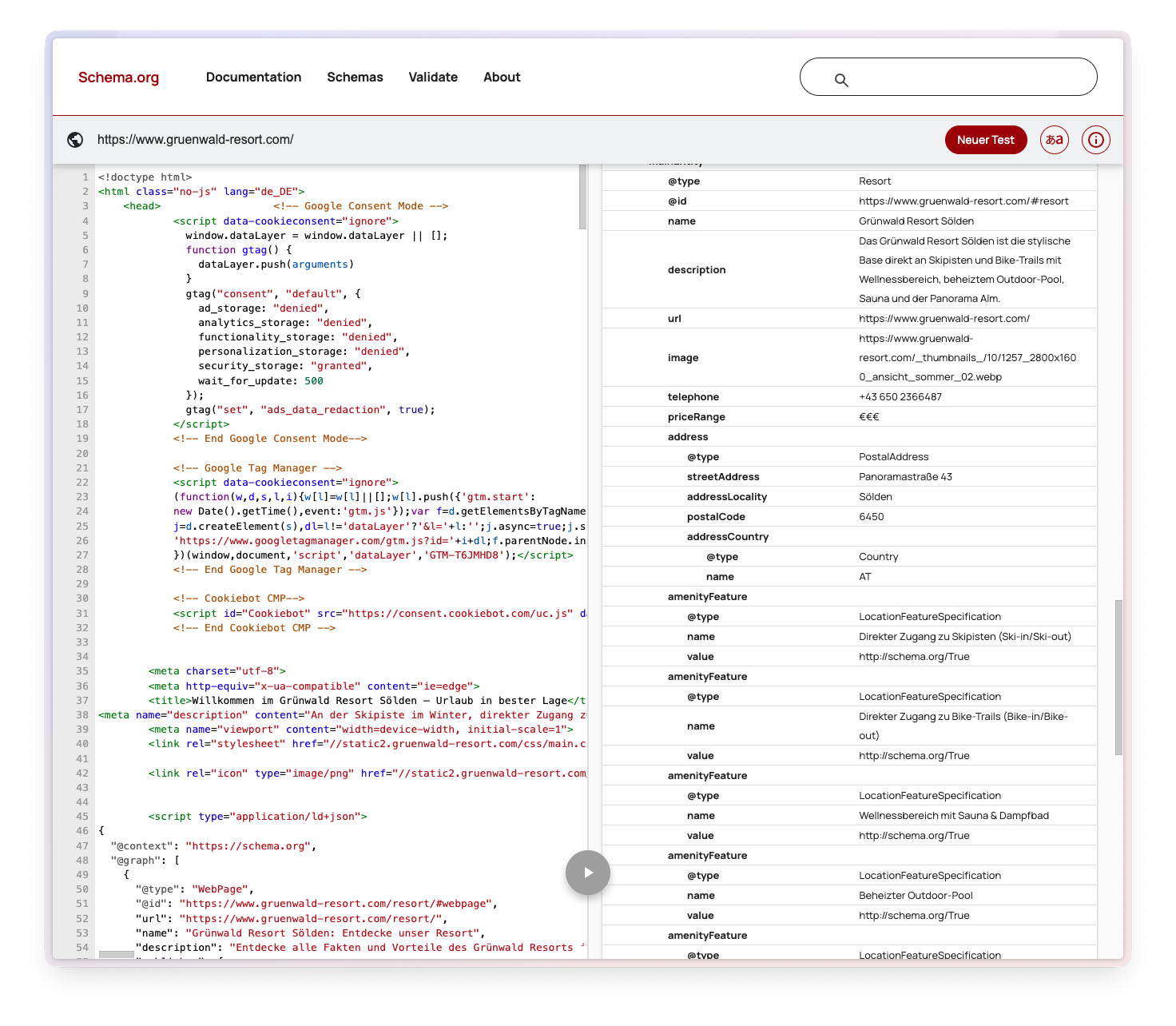
Machine-readable markup per Schema.org that gives search engines and LLMs context and trust.
Platform coverage
Visibility across ChatGPT, Perplexity, Gemini, Google AI Overviews and Copilot, tuned to each citation logic.
Off-domain signals
Mentions and sources beyond your own website that AI systems use as proof of trust.
AI visibility monitoring
Ongoing tracking of which AI answers and which prompts mention the company.
Concrete deliverables
- GEO audit of current AI visibility
- Entity and topic architecture
- Optimization of existing and new content for citability
- Structured data (Schema.org) & knowledge graph maintenance
- Building mentions in cited sources
- Monitoring dashboard for AI mentions & share of voice
Frequently asked questions
What is Generative Engine Optimization (GEO)?
GEO covers all measures that prepare a company so that generative AI systems such as ChatGPT, Perplexity, Gemini or Google AI Overviews recognize it as a source, cite it and recommend it. The goal is not a position in the results list, but the mention in the generated answer itself.
What is the difference between SEO and GEO?
SEO targets placements in the Google results list and clicks. GEO targets being cited and recommended in AI answers. Both build on the same technical foundation, and around 80 percent of the measures work for both worlds.
Does AI search replace Google search?
No, it is a shift, not a replacement. Google still holds over 90 percent market share on mobile in Austria. At the same time, for search terms with an AI answer box, the organic click-through rate drops by around 34.5 percent. Serving both channels hedges against this shift.
How do I become visible in ChatGPT?
Through citable, structured content, a clear entity and schema architecture and mentions in trustworthy sources. AI systems select sources that answer a sub-question clearly and reliably. Dometrics builds exactly this foundation and makes the progress visible in monitoring.
How do you measure AI visibility?
Through a defined set of relevant prompts checked regularly against ChatGPT, Perplexity and Google AI. It records whether and how the company is mentioned, its share of voice in the answers and the proportion of brand-related mentions, bundled in the Dometrics dashboard.
What is the difference between GEO, AEO and LLMO?
The terms describe essentially the same goal: visibility in AI answers. AEO (Answer Engine Optimization) emphasizes answer formats, LLMO (Large Language Model Optimization) the optimization for language models, GAIO is an umbrella term. GEO has established itself as the overarching term.
What is llms.txt and does my website need it?
llms.txt is a proposed file that offers AI systems a website's most important content in a structured way. For Google search it is not required. What remains decisive is indexability, structured data and content quality, llms.txt is a useful addition, not a replacement.
How long does it take for GEO to work?
That depends on domain authority, existing visibility and mention density. First mentions are realistic within weeks to a few months depending on competition, while reliable presence across many prompts requires consistent topic building over six to twelve months.
Does GEO work without SEO?
No. A technically clean, indexable website is a prerequisite for AI systems to capture content at all. SEO and GEO share around 80 percent of the measures, and Dometrics treats them as one connected system.
Which companies is GEO worth it for?
Especially for information- and advice-intensive industries, for eCommerce and for B2B with products that need explaining. If the analysis finds no realistic potential, the mandate is declined.
Which AI platform matters most for my company?
It depends on the target audience. Through the reach of Google AI Overviews, Google is mandatory for most companies, research-heavy audiences are often active on Perplexity, and ChatGPT is growing broadly. The platform priority emerges from the audit.
What does GEO cost?
GEO is calculated on an outcome basis, not via hourly packages. The realistic range for your own company comes from the potential analysis in the funnel.