Generative Engine Optimization (GEO): the guide to visibility in AI search
How ChatGPT, Google AI Overviews and Perplexity select sources, what counts according to Google, and how GEO delivers measurable visibility. With figures from Austria.
A growing share of research no longer ends on a results page, but in a generated answer. Anyone who does not appear there loses visibility to those who do, regardless of the classic ranking. This guide shows how AI searches select their sources, what demonstrably counts according to Google, and how Generative Engine Optimization is built systematically.
What is Generative Engine Optimization?
Generative Engine Optimization (GEO) shapes content so that AI systems recognize it as a reliable source, cite it and integrate it into their answers. This applies to ChatGPT and Perplexity just as much as to the AI Overviews and the AI Mode of Google Search.
The decisive difference from classic search engine optimization lies in the goal: SEO fights for a position on the results page, GEO for the mention in the answer itself. Both build on the same foundation, and that is precisely what makes GEO plannable rather than mystical.
Good to know: In its official guide to AI optimization, Google confirms that AI Overviews and AI Mode are based on the core ranking systems of Google Search. There is no separate “AI index”. Whoever is invisible to search is invisible to the AI answer as well.
Why GEO matters now: the figures for Austria
The AI Readiness Report by Handelsverband and Google Austria shows how far AI usage has already become everyday life in Austria:
- 95% of Gen Z use AI services, meaning almost universal adoption. 60% of this generation use ChatGPT several times a week.
- 68% of Austrian companies already deploy AI, above all for copywriting, translation and as intelligent search.
- 67% of consumers want AI support when searching for prices, 50% for product recommendations and provider comparisons. AI commerce is no longer a future vision.
- 44% of AI users ask the AI concrete questions on topics such as finance, law or energy. These are exactly the questions that used to be search queries.
The consequence is simple: the next generation of customers researches in AI answers, and a substantial part of purchase decisions begins there. Companies whose content is invisible to these systems simply do not appear in a growing part of the customer journey.
How AI searches select their sources
Anyone who wants to appear in AI answers has to understand how the answer is formed. Two mechanisms are central, both documented officially by Google:
Retrieval-Augmented Generation (RAG)
The language model does not answer the question from memory. Through the ranking systems of search, it retrieves relevant, up-to-date pages from the index, checks their content and builds an evidenced answer from it, including clickable source links. This “grounding” decides who gets cited: pages that deliver the clearest, most reliable information for the sub-question.
Query fan-out: one question becomes many
In response to a user question, the system generates several related search queries in parallel. “How do I restore a lawn full of weeds?” becomes, for example, “best herbicides for lawns”, “remove weeds without chemicals” and “prevent weeds”. The answer is assembled from the results of all these sub-queries.
In practice this means: whoever covers a topic completely becomes visible, not whoever matches a single phrase exactly. Topical authority beats keyword matches.
GEO and SEO compared
| SEO | GEO | |
|---|---|---|
| Goal | Position on the results page | Mention in the generated answer |
| Unit | Keyword | Topic, entity, prompt |
| Success measurement | Rankings, organic clicks | AI mentions, citations, AI referrals |
| Technical basis | Indexing, crawling, page speed | identical, plus snippet suitability |
| Content logic | Cover search intent | Deliver citable, evidenced statements |
| Time horizon | medium to long term | medium to long term |
The table shows: GEO is not a break, but a shift of the goal on the same foundation. How this foundation is built is described in the guide search engine optimization.
What really counts according to Google
The official Google guide can be condensed into three levers. They align with what demonstrably shows effect in GEO projects:
1. Content with substance instead of common knowledge
AI systems analyze many sources at once. What gets cited is what goes beyond the ordinary: your own data, first-hand experience, clear viewpoints, concrete figures. Generic content along the lines of “7 tips for …” repeats what is everywhere anyway and gives the model no reason for a citation. Whoever, by contrast, is the only source with a solid statement on a sub-question becomes the reference.
2. Technical clarity as the entry ticket
A page can only appear in AI answers if it is indexed and suitable for snippets. Crawlability, clean structure, fast load times and semantic HTML therefore remain the entry ticket, for classic search and for every generative feature that builds on it.
3. Maintain entities and company data
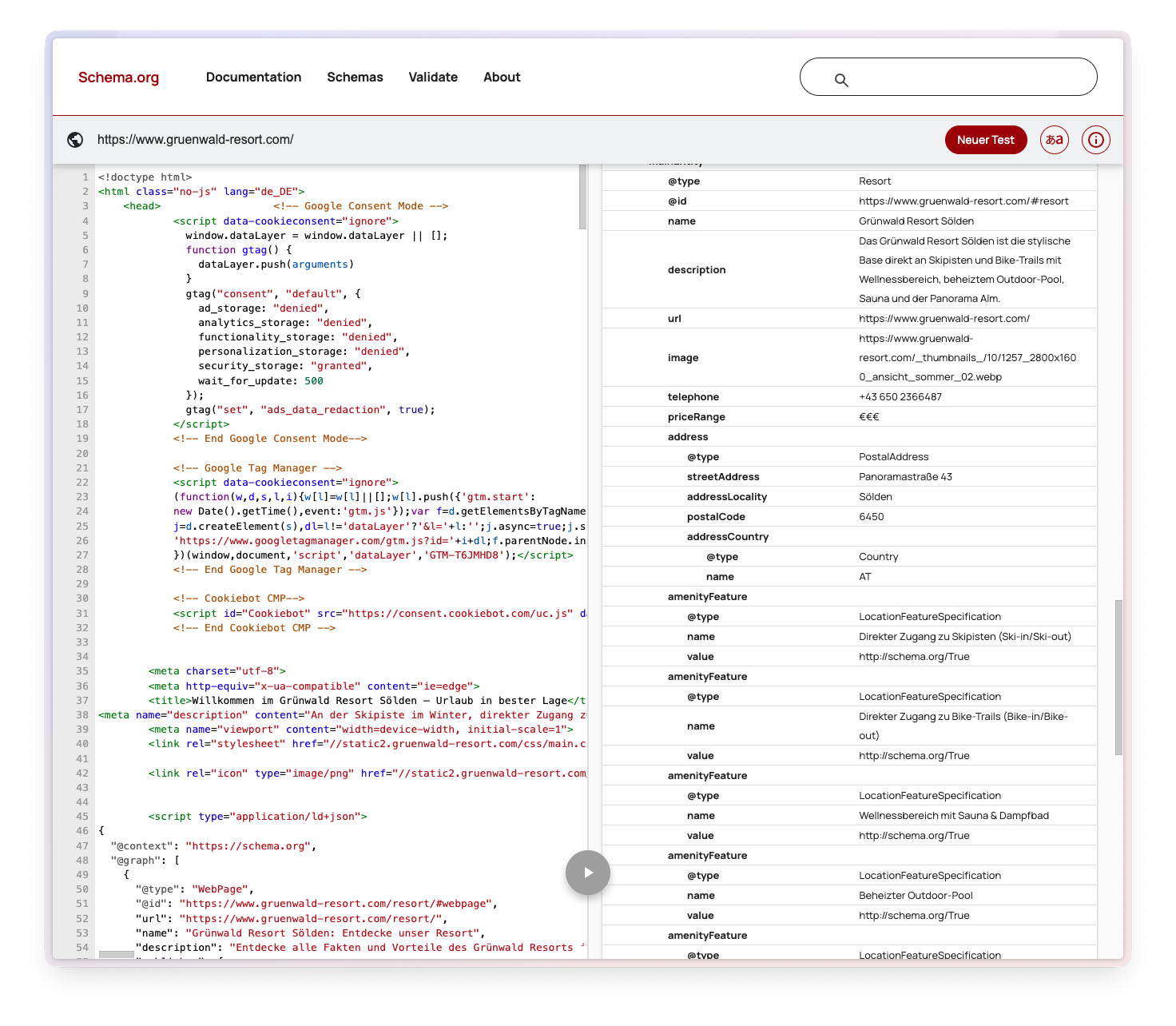
AI systems think in entities: who is this company, what does it stand for, in which region is it active? Consistent company data, a well-maintained Google Business Profile, Merchant Center feeds for shops and structured data according to Schema.org give the systems context and trust. According to Google, structured data is not mandatory for AI answers, but it remains useful for rich results and reinforces the entity picture.
What you can skip
Around GEO, tactics circulate that cost effort and deliver nothing. Google clears this up in the guide itself:
- llms.txt and special markup: No dedicated AI text files or Markdown versions of the website are needed. Google does not treat such files preferentially.
- Chopping content into mini sections: The systems understand several topics per page and show the relevant part. There is no ideal page length.
- Rewriting texts "for the AI": Language models understand synonyms and meaning. Covering longtail variants en masse is unnecessary and, beyond a certain extent, collides with the spam guidelines.
- Generating bought mentions: Inauthentic mentions in forums and blogs are filtered out by the same systems that also block search spam.
Important: Anyone who understands GEO as a collection of hacks optimizes past the system. The answer systems reward the same qualities as search: substance, clarity, trustworthiness. The difference lies in the consistency with which topics are built up completely and citably.
GEO in practice: from audit to measurable presence
A solid GEO setup follows a clear sequence. This is how Dometrics implements projects within the GEO & AI Search service:
- GEO audit: For which relevant prompts is the company mentioned today, for which the competition? This defines the gap and the priorities.
- Entity architecture: Company data, profiles and structured data are made consistent so that the systems have an unambiguous picture of the brand.
- Topic and content build-up: Content closes the gaps from the audit, with evidenced statements, your own data and a clear H2/H3 structure that answers sub-questions directly.
- AI visibility monitoring: A fixed prompt set is continuously checked against ChatGPT, Perplexity and Google AI. Progress is measured, not claimed.
This process turns a diffuse trend into a controllable project: every measure pays into a measurable metric, the mention in the answers that are relevant to the business.
Remember: GEO is not a new playing field next to SEO, but the same discipline with a shifted goal. Indexability and substance are the entry ticket, topical authority decides on the citation, and monitoring makes the progress verifiable.
Conclusion
The shift of search into generated answers has measurably arrived in Austria: 95 percent of Gen Z use AI services, two thirds of companies already work with them. Visibility in these answers follows no secret tricks, but the documented mechanisms of RAG and query fan-out: indexable pages, content with substance, a clear entity picture and consistent monitoring. Whoever builds this systematically now occupies positions that competitors will later struggle to reclaim.
Frequently asked questions
What is Generative Engine Optimization (GEO)?
GEO covers all measures that prepare content so that AI systems like ChatGPT, Perplexity or Google AI Overviews recognize it as a reliable source, cite it and weave it into generated answers. The goal is not a position on the results page, but a mention within the answer itself.
Does GEO replace classic SEO?
No. Google explicitly confirms that the generative AI features of search build on the core ranking systems. Anything that is not indexed and not relevant will not appear in any AI answer either. GEO is the logical extension of SEO, not a replacement.
What is the difference between GEO, AEO and LLMO?
At their core, the terms mean the same thing: visibility in AI-generated answers. AEO (Answer Engine Optimization) emphasizes answer formats, LLMO the optimization for language models. GEO has established itself as the umbrella term.
Does my website need an llms.txt file?
Not for Google Search. Google makes clear that no special AI text files, no dedicated markup and no Markdown are needed to appear in generative AI features. What matters is indexability, crawlability and content quality.
How do you measure visibility in AI answers?
Through AI visibility monitoring: a defined set of relevant prompts is regularly checked against ChatGPT, Perplexity and Google AI Overviews. It records whether, how and with which source the company is mentioned. This is complemented by referral data from AI services in your own analytics.
Is GEO already worth it for SMEs in Austria?
Yes, especially now. 95 percent of Gen Z use AI services, while most competitors still align their content exclusively with classic rankings. Whoever establishes themselves early as a citable source defends that position more easily than conquering it later.
How long does it take for GEO to work?
AI answers draw on the search index and therefore react as slowly or quickly as organic rankings. Depending on competition, first mentions are realistic within weeks to a few months, while solid presence across many prompts requires consistent topic building over 6 to 12 months.