Every inquiry has a price
Call, form and email Tracking show which channel brought which inquiry and what it cost. For the first time, the business sees in black and white what marketing delivers.
Dometrics helps SMEs and specialist trades make inquiries predictable: lean setups, local visibility and a budget that demonstrably pays off. Without an in-house marketing department.
The work is good, yet capacity stays uneven. The problem rarely lies in the service and almost always in visibility.
Jobs come in through word of mouth. That works until it doesn't: referrals can't be planned or scaled, and in weak months the pipeline runs dry.
Retainer paid, report received, impact unclear. Many businesses have already invested budget in marketing without ever being shown which inquiry it actually produced.
Anyone who isn't on the first page when someone searches for a trade plus region simply doesn't exist for new customers. Inquiries go to the most visible, not the best.
Between day-to-day operations, job sites and hiring, marketing gets left behind. It takes a setup that runs without an internal marketing department and still stays controllable.
Anyone looking for a plumber, a coating service or care services asks Google, or increasingly an AI, and decides within the first few results. Technical quality plays no role in that moment because it isn’t visible. What is visible are rankings, reviews and a website that builds trust.
Dometrics helps SMEs and specialist trades build exactly this visibility, without turning it into a marketing project that paralyses the business. A lean setup, clear ownership, one number as the benchmark: what does an inquiry cost, and what is it worth?
The starting point is an honest stocktake: where the business stands in its region, what the most visible competitors do differently, and which service has the best lever. From this, a setup emerges in a clear order: Tracking and Google Business Profile first, then campaigns on the services with the highest order value.
The system behind it is the Growth Engine, scaled for the mid-market. How local visibility comes about in detail is shown on the SEO service page.
Five modules, leanly scaled: for SMEs, Dometrics doesn't build a corporate structure but a setup that fits the size of the business and pays off against the order value.
Call, form and email Tracking show which channel brought which inquiry and what it cost. For the first time, the business sees in black and white what marketing delivers.
Google Ads in the catchment area, on the services with the best order value. Seasonally steered, regionally limited, with no waste on audiences that never become customers.
Top rankings for a trade plus region, a well-kept Google Business Profile and presence in AI answers. Whoever searches locally finds the business, not the competitor.
Clear service pages, references and an inquiry path that works in a minute, even on mobile. Visitors turn into calls and completed forms.
Seasonal reminders, maintenance and follow-up appointments, review requests after the job. Existing customers stay active, and referrals no longer happen by chance alone.
The lower limit isn't set by Dometrics but by the math: the budget has to be proportional to the order value. For specialist trades with four- or five-figure order values, a lean setup often pays off with just a few hundred euros of advertising budget per month. The Growth Report clarifies this upfront with concrete figures.
Little, and that's by design. After the setup, the business mainly needs to provide one thing: feedback on which inquiries turned into jobs. Everything else, from campaigns to copy to reporting, is handled by Dometrics.
The measurability and the consequence that follows from it. Every inquiry is attributed to a channel, and every quarter the proof lands on the table. If no further lever is identified, Dometrics recommends cutting the budget instead of extending it.
It is the single most important lever, but rarely the only one. The profile gets the business into the map results, while the website behind it decides whether a click becomes an inquiry. Add reviews, consistent business data and, increasingly, presence in AI answers. Only this interplay makes a business the first choice in its catchment area.
Yes, if the budget is deployed precisely: limited to the catchment area, focused on the services with the best order value, and with call tracking that attributes every inquiry to a click. With four- or five-figure order values, a single additional job per month often covers the entire advertising budget. What decides is the math, not the size of the budget.
Very. According to the Local Consumer Review Survey by BrightLocal, 92 percent of consumers say star ratings influence their decision, and around two thirds expect at least 4 stars. Recent reviews also carry considerably more weight than old ones. That is why a systematic review request after every job is part of the setup instead of being left to chance.
Yes. Dometrics is a certified KMU.DIGITAL consultant in the subject area of e-commerce and online marketing. According to the WKO, the Austrian federal government covers a share of the consulting costs, for example for the status and potential analysis and the strategy consultation; the exact rates change with each funding period. A completed consultation is also the prerequisite for the subsequent implementation subsidy.
The entry point is the Growth Report at a one-time fee of 490 euros: an analysis of visibility, competitors and measurement gaps with a clear yes-or-no recommendation. If no lever is found, the fee is refunded; otherwise it is credited against the next phase. After that comes the setup at a fixed price of 3,900 euros over 90 days, and ongoing operations start at 2,400 euros per month with a quarterly commitment.
From local search, Google Business Profile and reviews to the KMU.DIGITAL subsidy: the most important levers for predictable inquiries in your own catchment area, summarized compactly.
Anyone who needs a plumber, an electrician or a tax advisor asks Google, Google Maps or, increasingly, an AI. The numbers behind this are clear: according to Google, 76 percent of people who search for a nearby provider on their smartphone visit a business within a day, and searches containing near me have multiplied over the years. Local search is the moment in which the job is decided.
For specialist trades this means: referrals remain valuable, but even a recommended business gets googled before the call. What the prospect finds there, rankings, reviews, the website, decides whether the referral holds. Whoever is not on the first page for a service plus region search practically does not exist for new customers.
For searches with local intent, Google shows a map with three entries above the classic results, the so-called Map Pack. According to click distribution studies, these three spots attract a substantial share of all clicks on local searches. Whether a business appears there is driven mainly by three factors: relevance and completeness of the Google Business Profile, distance to the searcher, and the prominence of the business, measured among other things by reviews.
A well-maintained profile is therefore mandatory: correct categories, all services listed, current photos, answered questions and business data that match the website exactly. Dometrics sets up the profile so that it works together with the website and the review strategy, and measures through calls and direction requests what it actually delivers.
Hardly any signal influences the decision as strongly as the star rating. According to the current Local Consumer Review Survey by BrightLocal, 92 percent of consumers say star ratings influence their choice; around two thirds expect at least 4 stars, and almost a third only considers businesses rated 4.5 stars or higher. Recency matters too: reviews from the past few months carry considerably more weight than old ones.
Good work alone does not generate reviews, though; customers still need to be asked. That is why the setup includes a systematic review request after every completed job, via SMS or email with a direct link. The profile grows continuously, and the business builds a lead that competitors cannot catch up on overnight.
The Google Business Profile brings the visibility, the website turns it into inquiries and rankings. Structure is what counts: a dedicated page per service and, where useful, per location or region, with real content instead of interchangeable boilerplate. References with photos of real projects, a clear pricing logic and an inquiry path that works on a phone in one minute make the difference. How Dometrics approaches this is shown on the SEO service page.
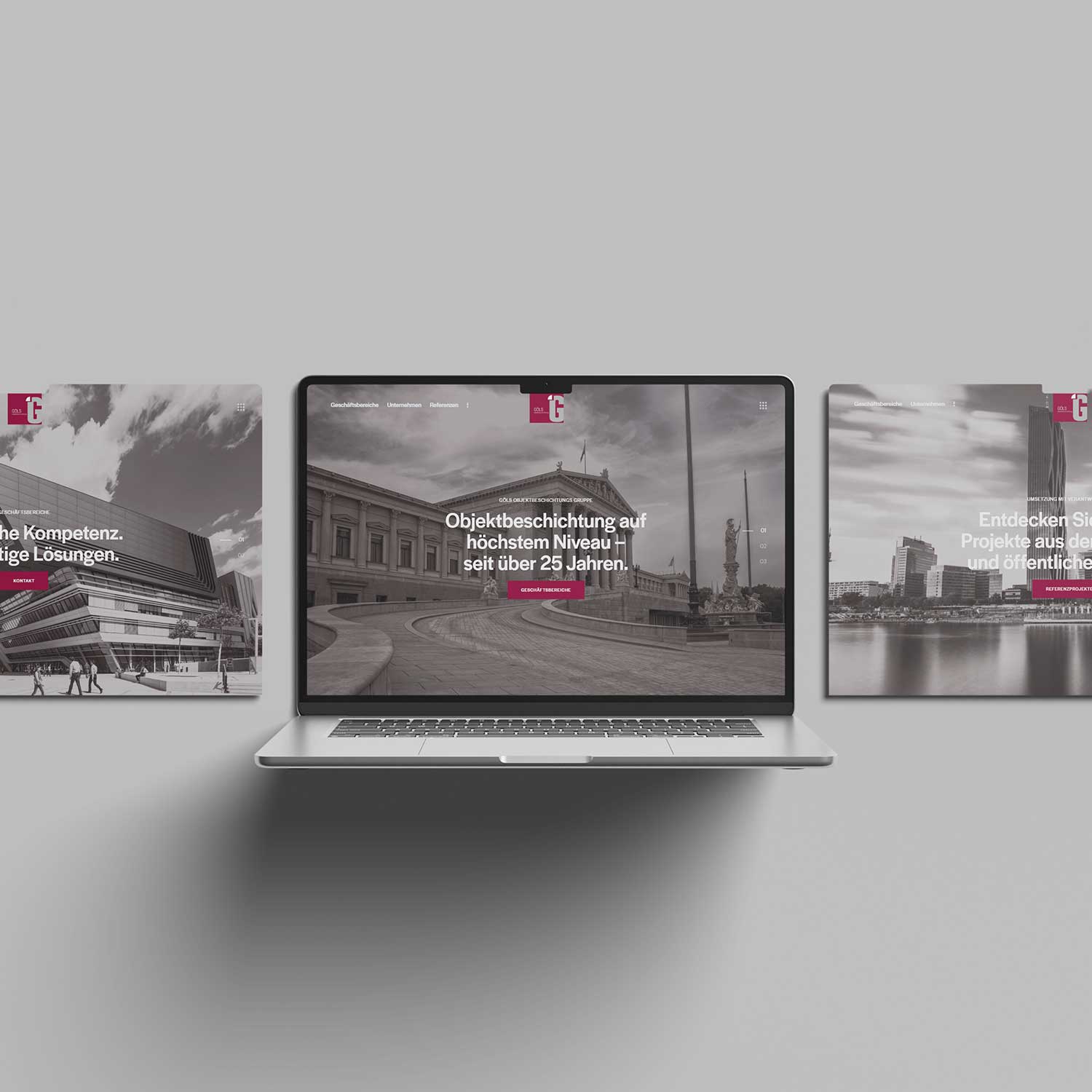
Then there is the technical side: fast load times, a clean page structure and structured data such as LocalBusiness markup that make location, services and opening hours machine-readable for search engines. The basics are explained in the guide search engine optimization. What this means in practice is shown by the Göls Gruppe: top 3 Google rankings and 30 percent more qualified project inquiries after the relaunch.
Local search is measurably shifting into AI assistants. In current US consumer surveys, almost half of consumers say they have already used AI tools such as ChatGPT to find local providers, a multiple of the previous year. Whoever is not present there with correct, consistent data simply does not appear in the recommendations, regardless of the quality of the work.
Generative Engine Optimization (GEO) makes sure a business shows up in these answers: consistent business data across all directories, structured markup, citable content about services and region, and reviews as a trust signal. GEO & AI Search is a dedicated module at Dometrics and builds on the same foundations as local SEO.
Google Ads works differently for specialist trades than for online shops: the budget is smaller, but the order value is often four or five figures. The math decides, not the size of the budget. Campaigns run limited to the catchment area, on the services with the best order value and at the times when the business can actually take on inquiries. Call conversions show which click turned into a phone call.
Wasted spend is the biggest enemy of small budgets: wrong regions, unsuitable search terms, clicks from job seekers instead of customers. With these cleanly excluded, a budget of a few hundred euros per month often pays off. What clicks cost in individual industries is shown in the guide Google Ads costs; the approach is described on the Paid Advertising service page.
Not every specialist trade needs daily content. But a well-kept presence on one or two channels fulfills two tasks that pay off directly: it shows real projects and results, which builds trust before the inquiry, and it supports recruiting, because applicants vet a business just like customers do.
The rule is substance over frequency: before-and-after photos, glimpses of the team and completed projects beat generic posts. Paid reach on Meta complements this in a targeted way, for example regionally limited for seasonal services. Here too, success is measured in inquiries, not likes.
For specialist trades, most inquiries come in by phone, and that is exactly where measurement usually breaks off. Without call tracking it remains invisible whether a call came through the campaign, the Google Business Profile or organic search. Dometrics therefore sets up measurement first: call, form and email tracking, complemented by direction requests and profile views.
Only with this foundation can budgets be steered: which channel brings inquiries at what cost, which service attracts the most valuable jobs, where budget seeps away. The business sees in black and white what marketing delivers, laid on the table every quarter. The details are described on the Tracking & Data Analytics service page.
Austrian SMEs do not have to pay for the entry point entirely out of their own pocket. Through the KMU.DIGITAL program run by the federal government and the Austrian Economic Chamber, digitalization consulting is partially subsidized: according to the WKO, currently 80 percent of the cost of a status and potential analysis up to 400 euros and 50 percent of a strategy consultation up to 1,000 euros; for the subsequent implementation of digital projects, subsidies of up to 30 percent are available. The exact conditions change with each funding period.
Subsidized consultations may only be carried out by certified consultants. Dometrics is listed as a KMU.DIGITAL consultant in the subject area of e-commerce and online marketing and produces analyses and strategy consultations that qualify for subsidy settlement. For businesses, this lowers the entry barrier considerably: a sound analysis first, implementation after, both structured to remain eligible for funding.
The system works for trade and construction businesses as well as for service providers, law firms, practices and manufacturing SMEs, wherever jobs are won regionally and a single order carries relevant value. The setup is scaled to the size of the business: no corporate stack, but the handful of measures that actually work in the catchment area.
The entry point is deliberately kept small: the Growth Report at a one-time fee of 490 euros analyzes visibility, competitors and measurement gaps and ends with a clear yes-or-no recommendation; if no lever is found, the fee is refunded, otherwise it is credited against the next phase. From Vienna, Dometrics supports SMEs and specialist trades across the DACH region. Get in touch.
A free initial analysis shows where a marketing budget holds potential and where it does not. Data-based, without obligation, with an honest assessment instead of a sales pitch.
Start the free analysisNo sales pitch, no commitment. Dometrics responds with an honest assessment and says so when there is no leverage to be found.