Search Engine Optimization (SEO): the complete guide to top rankings
What SEO is, how onpage and offpage optimization work together, and which factors decide your Google rankings – including an extensive FAQ.
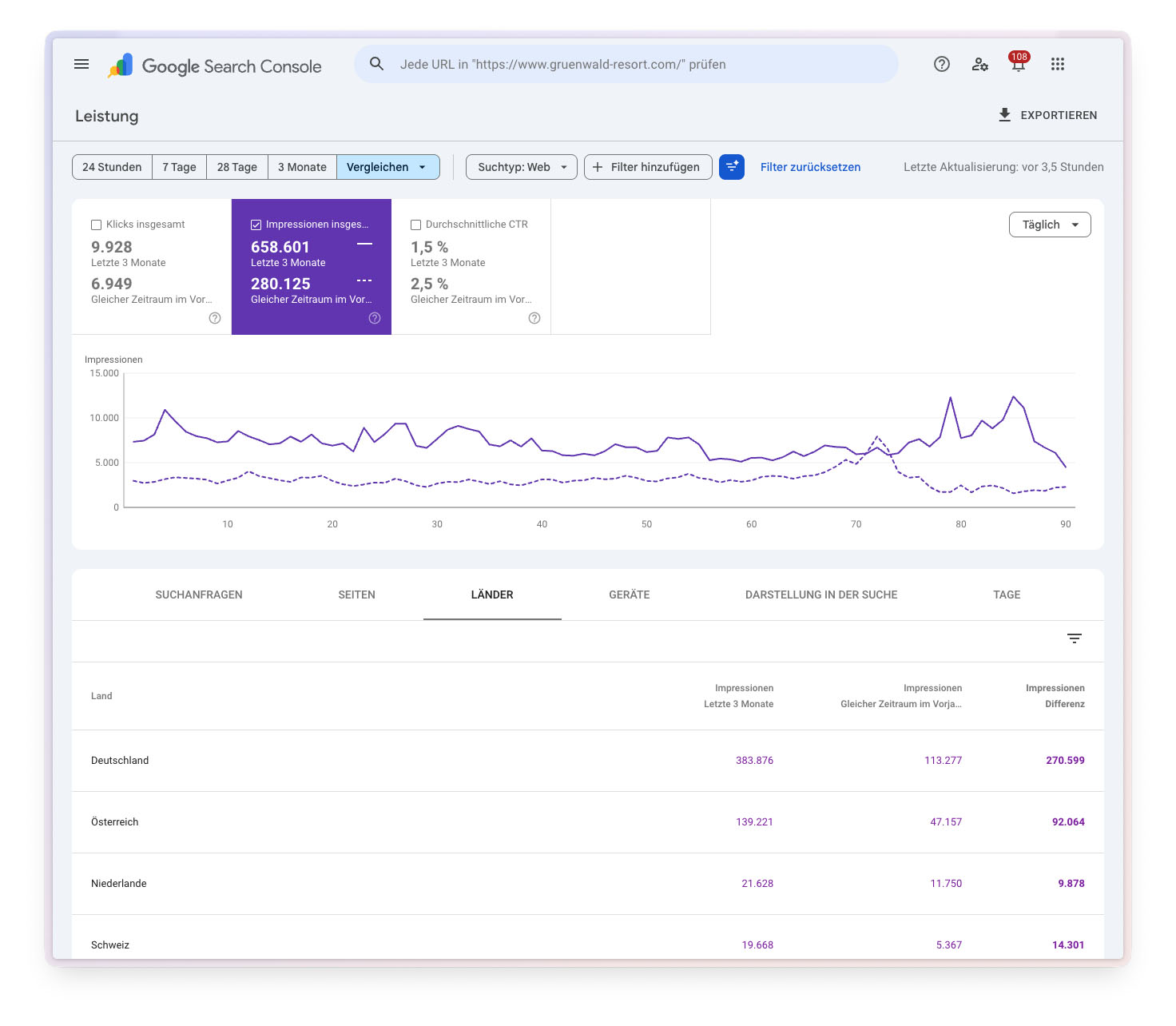
Search engine optimization decides whether a website gets found or stays invisible. The majority of clicks go to the first organic results – whoever ranks there wins qualified traffic without paying per click. This guide shows comprehensively how SEO works and which levers truly matter today.
What is SEO?
SEO stands for Search Engine Optimization and covers all measures that move a website up in the unpaid search results. Search engines try to serve the most relevant page for every query. The goal of SEO is to build your own page so that it meets exactly this relevance for the desired search terms – in content, technology and structure.
Whether the website runs on WordPress, TYPO3 or Drupal, or integrates an eCommerce solution such as Shopify or SAP Hybris, makes no fundamental difference. The principles of good onpage and offpage work apply across systems.
Good to know: Organic traffic is sustainable. Unlike paid ads, visibility does not disappear once the budget ends – rankings once built keep delivering for months.
Why SEO pays off
For most users, search engines are the first step when looking for information. The decisive point: it is mainly the top results that get clicked. A strong placement therefore brings measurable advantages:
- More qualified traffic – visitors with concrete intent instead of wasted reach.
- Predictable visibility – lasting presence for relevant search terms.
- An edge over the competition – whoever ranks at the top is noticed first.
- Better cost-benefit ratio – no cost per click like with ads.
- A stronger brand – presence in search builds trust and recognition.
Onpage optimization
Onpage covers everything that happens directly on your own website: content, technology and structure. The goal is a page that is clearly understandable for users and search engines alike. The following factors are the most important levers.
Site structure & navigation
A flat, logical structure helps crawlers and users equally. Important pages should be reachable in a few clicks, with the main categories linked directly from the homepage. Too many levels make indexing harder – links as clean HTML text elements are preferable to technical gimmicks.
Domain
The domain is the digital address and a trust signal. Ideal is a descriptive domain that makes the company recognizable, with an extension that fits the target audience. Right after launch, the website should be registered in the Google Search Console to speed up indexing.
URL structure
Clear, descriptive URLs with relevant terms help search engines classify a topic faster and are also meaningful for visitors. The structure should be well thought out from the start and ideally not changed later, since changes can cost rankings and links.
Title tag
Every page needs its own unique title with the most important keyword as close to the start as possible. It should be meaningful for search engines and people alike and not too long, so it is not cut off in the results.
Meta description & meta tags
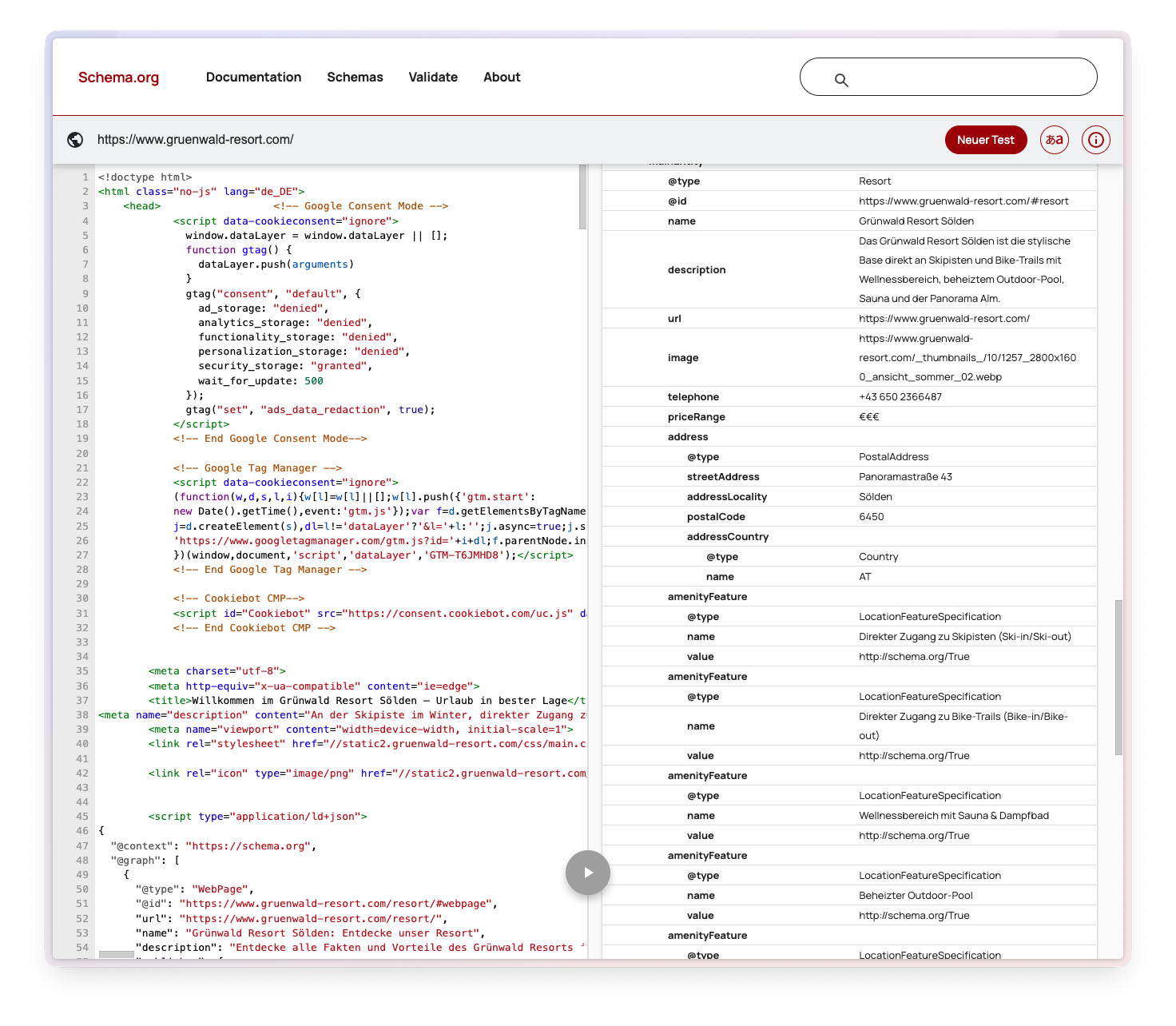
The meta description is the explanatory text below the title in the search results. It barely influences the ranking directly, but strongly affects the click-through rate – a concise, inviting description with the main keyword pays off. Other meta information (such as language or crawler directives) is technically relevant but usually secondary for ranking.
Sitemap
An XML sitemap lists all relevant pages and helps search engines capture the website in full. Submitted via the Search Console, it speeds up indexing – a hierarchical structure is especially worthwhile for large websites.
Internal linking
Sensible internal links distribute relevance within the website and guide crawlers and users to important subpages. Meaningful anchor texts with the right terms reinforce the effect, and every subpage should remain reachable in a few clicks.
Content
Content is the decisive ranking factor. It should be unique, fully answer the search intent, be cleanly structured and updated regularly. A clear heading hierarchy from H1 to H6 organizes the text, while sensible emphasis and descriptive alt texts on images improve clarity. Keyword stuffing is obsolete – modern search engines understand topics, not just individual words.
Outbound links
References to other, trustworthy sources signal that content is well researched and well embedded. Used sparingly and on topic, outbound links are a positive quality signal.
Domain age
Established domains tend to enjoy more trust. Age alone decides nothing, but it is one of many factors – a well-maintained, long-standing domain often has a head start.
Error pages (404)
Restructuring inevitably leads to URLs that no longer exist. A properly set up 404 page and consistent redirects prevent such errors from burdening the ranking or losing users.
Page Speed
Loading time is both a ranking and a comfort factor – especially on mobile devices. Fast pages extend time on site and reduce bounces. Tools like Google PageSpeed Insights uncover bottlenecks that can be fixed in a targeted way.
Local optimization
For many queries, Google factors in the location and favors local results. A well-maintained Google Business Profile with consistent details (name, address, phone) makes a company findable locally and on the map.
Onpage services at a glance
- Domain & URL structure
- Title & meta information
- Site structure & internal linking
- Content & headings
- Sitemap & indexing
- Page Speed & technology
- Error pages & local optimization
Offpage optimization
Offpage concerns factors outside your own website. They cannot be controlled directly, but through effort, consistency and know-how they contribute substantially to the ranking. At the center are backlinks and their anchor texts.
Link building
The number and above all the quality of external links is a central ranking criterion. A few strong, topically relevant references carry more weight than many weak ones. What matters is the authority of the linking domain, natural growth over time and topical proximity – a sudden, unnatural spike can have a negative effect.
Important: Purchased link networks or mass cheap links are a risk. Only genuine, earned references from pages with substance work sustainably.
Anchor text of inbound links
Search engines factor the link text into their assessment. Varied, meaningful anchor texts with occasionally fitting keywords look natural and support the ranking of the target page – monotonous repetition of the same text, by contrast, appears unnatural.
Offpage services at a glance
- Continuous backlink building of high quality.
- Linking with relevant keywords and varied anchor texts.
- Monitoring of the entire web presence.
- Reporting including ranking surveillance.
- Ongoing consulting and optimization.
Onpage, offpage and technology at a glance
| Area | What it is about | Examples |
|---|---|---|
| Onpage | Your own website | Content, title, URL structure, internal links, Page Speed |
| Offpage | External signals | Backlinks, anchor texts, mentions, domain authority |
| Technical | Crawl & index | Sitemap, structured data, mobile optimization, 404 handling |
SEO, SEA and SEM
SEM (search engine marketing) is the umbrella term for all measures used to win visitors via search engines. It splits into two disciplines: SEO delivers organic, unpaid reach, while SEA covers paid ads. Used together, they cover short-term and long-term visibility.
Thinking SEO and GEO together
Search is increasingly shifting into AI answers such as ChatGPT, Perplexity or Google AI Overviews. Classic SEO remains the basis, but is complemented by Generative Engine Optimization (GEO): preparing content so that it is also cited in generated answers.
Remember: SEO is not a project with an end date but an ongoing process of analysis, implementation, control and adjustment. Whoever stays on it builds a visibility lead that competitors can only catch up to with difficulty.
Conclusion
Good rankings emerge from the interplay of high-quality content, clean technology and trustworthy backlinks – validated through honest tracking. SEO is mandatory, GEO the logical extension. Whoever tackles both systematically makes visibility predictable instead of random.
Frequently asked questions
What does search engine optimization involve?
It means aligning a website in terms of content, technology and structure so that it appears higher up in the unpaid results for selected search terms. This covers content, internal and external linking as well as technical aspects.
What is SEO?
SEO (Search Engine Optimization) is the sum of all measures that move a website up in the organic, unpaid search results in order to win more qualified traffic through relevant keywords.
How does SEO work?
Search engines return what they consider the most relevant pages for every query. SEO ensures that your own page meets exactly this relevance for the desired terms – and is therefore ranked higher and visited more often.
How do search engines rank my website?
Crawlers read the content, an algorithm evaluates it against hundreds of signals (relevance, quality, technology, linking) and sorts the results accordingly. The rules differ by search engine and change constantly.
What is search engine ranking?
The ranking is the position of a page within the search engine result pages (SERPs) for a specific search term. The higher up, the more clicks.
What are SERPs?
SERPs (Search Engine Result Pages) are the result pages that appear after a query is entered – including organic results, ads and special formats such as snippets or local results.
Why is SEO important?
The majority of clicks go to the top results. Whoever ranks there gains lasting visibility and qualified traffic – without paying per click.
Who benefits from SEO?
Practically everyone – from a small blog to a large company. SEO strengthens visibility, brand and revenue, especially with clearly defined keywords and local relevance.
What is onpage optimization?
All measures on your own website: content, meta information, structure, internal linking and technology – with the goal of improving organic ranking.
What is offpage optimization?
All measures outside your own website, above all building high-quality backlinks that strengthen trust in the domain.
What is the difference between SEO and SEA?
SEO delivers organic, unpaid visibility. SEA refers to paid search ads. Together they make up SEM, search engine marketing.
How much does SEO cost?
That depends on scope, starting point and competition. Hourly rates typically range from around 100 to 200 euros – but the return achieved matters more than the price.
How long does SEO take?
There is no blanket answer. First effects often show after 2–3 months, stable top placements after 6–12 months. Once achieved, the effect lasts long term.
What is keyword research?
The systematic search for the terms a page should be optimized for – including search volume, competition and the search intent behind them.
What is an SEO analysis?
A structured review of the website against SEO factors: content, technology, indexability, internal structure and link profile. From this a clear action plan emerges.
What is an SEO text?
A text written so that it fully covers the search intent for a topic and thereby supports the ranking – helpful for people, not just for search engines.
What is link building?
The targeted building of backlinks from other, ideally topically relevant and trustworthy websites – a central offpage signal.
What is a backlink?
An inbound link: an external website links to your content. Backlinks are among the most important ranking criteria, provided they are of high quality.
What is a snippet?
The preview of a result in the search results – usually title, URL and meta description. A compelling snippet significantly raises the click-through rate.
What is technical SEO?
All optimizations beyond content that let search engines understand the page effortlessly: loading speed, mobile rendering, structured data, clean crawlability.